Certification is what separates equipment that is genuinely suitable for an explosive atmosphere from equipment that is merely described that way. ATEX is the European framework for it; UKCA EX is the United Kingdom’s own version, which took over there from the start of 2022. Spillrite units are built to carry both.
For an Australian buyer that combination is useful for a specific reason: it gives a health and safety adviser an external reference point to sign against, rather than a supplier’s word. When a purchasing officer asks what makes this machine acceptable in a classified area and a general-purpose vacuum unacceptable, the certification label is the short answer.
What the certification actually covers
An ATEX rating is applied to equipment intended for use in an atmosphere that may become explosive — gas, vapour, mist or combustible dust. It is a statement about the whole assembly, not about one component, which is why the way the machine is built matters as much as what powers it.
- Ignition sources removed — no motor, no switchgear, no heating element, nothing that arcs or runs hot in normal operation.
- Charge given a path — conductive components throughout and a deliberate route to earth, so static cannot accumulate and discharge across a gap.
- Materials chosen for the duty — metal fittings and base plates, anti-static filter media, anti-static hose with a bonded helix, anti-static resin where a moulded part is unavoidable.
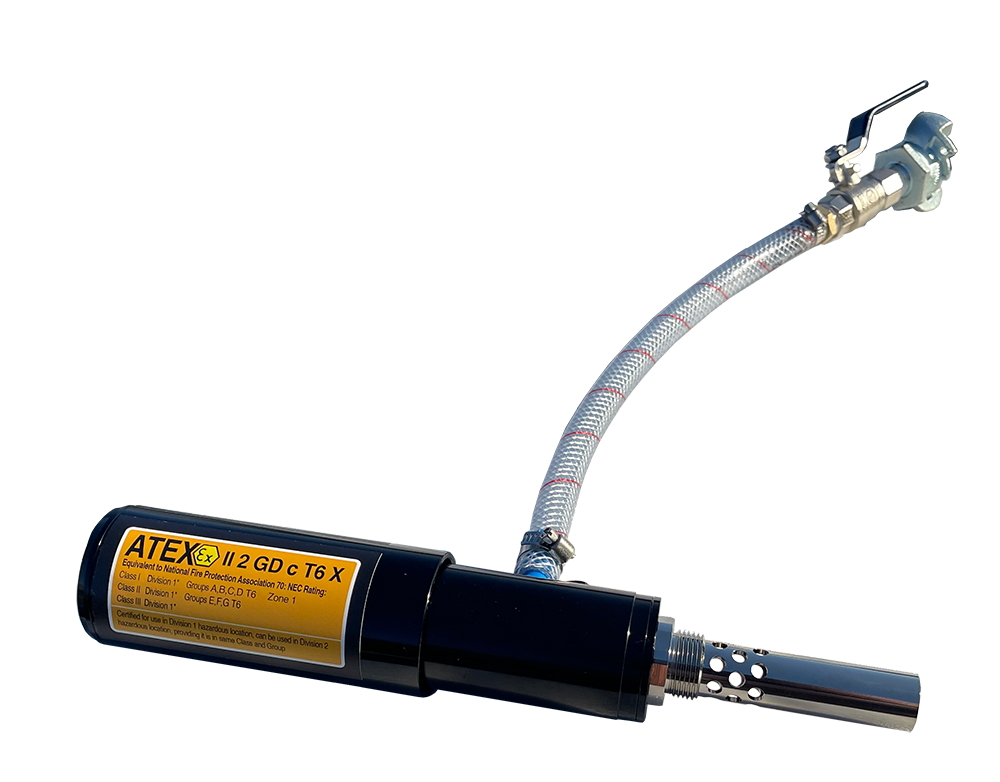
- The label on the machine — the certification marking stays with the unit, which is what an auditor looks for.
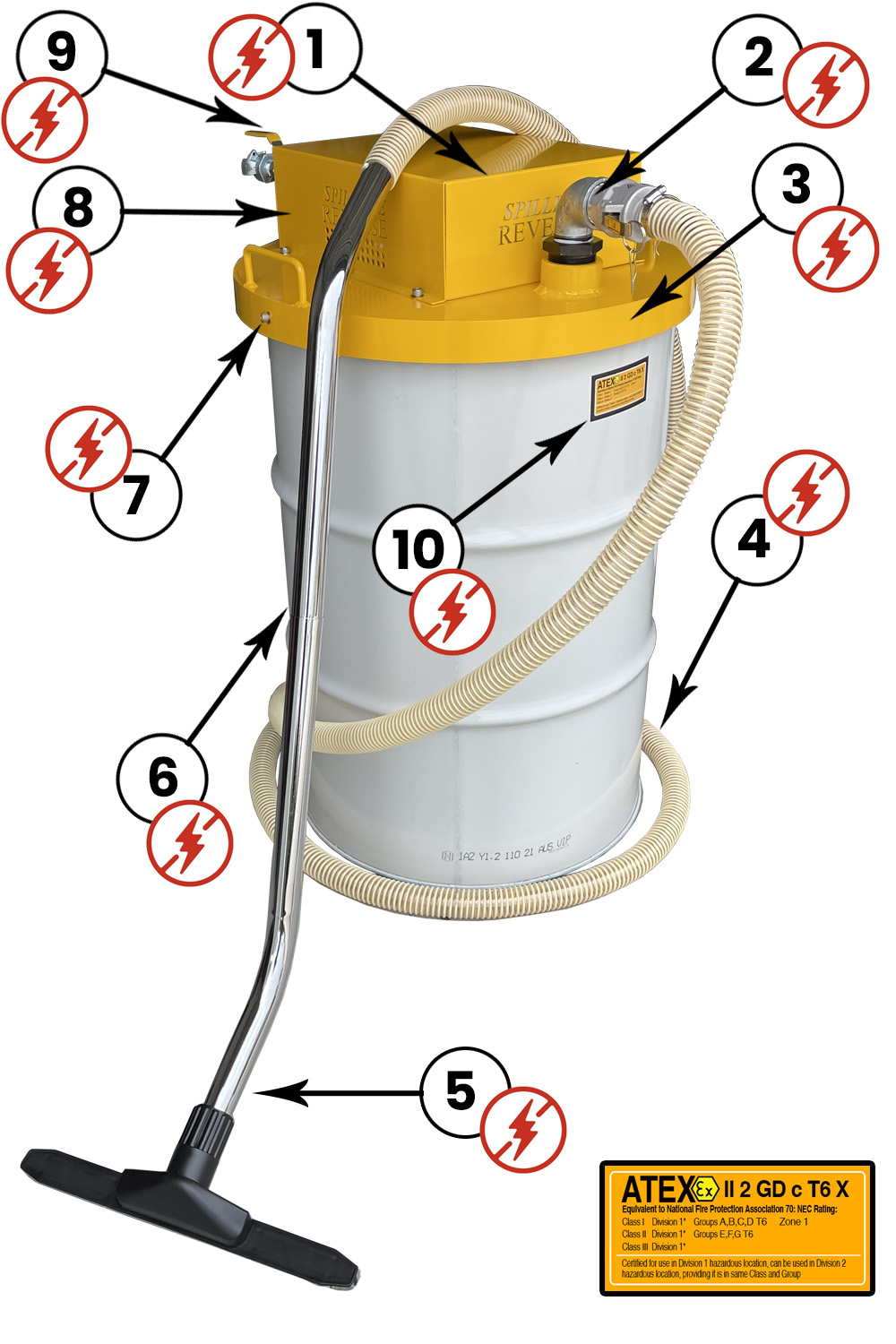
The build, component by component
The annotated view below is the clearest way to understand a certified unit: every numbered item exists either to remove an ignition source or to keep the assembly at one potential.
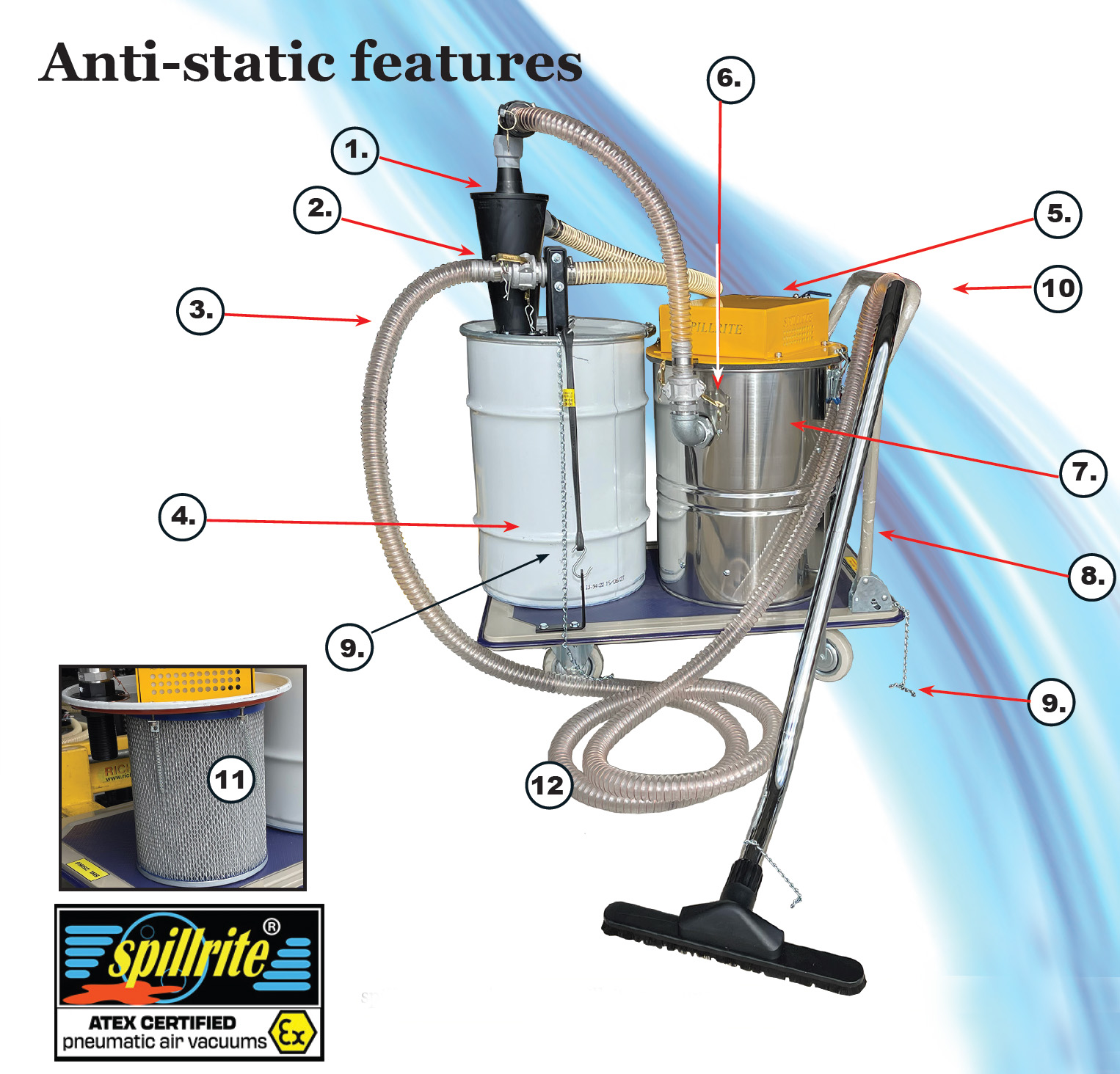
One detail is worth calling out because installers get it wrong. The anti-static suction hose carries a helix wire, and that wire has to be terminated — exposed and in contact with the wand or the camlock at the end of the run. A hose with an unterminated helix looks identical to a hose that is doing its job and provides none of the protection.
Proven where the dust is worst
Certification says the equipment is suitable. Field service says it lasts. The reverse-filter-clean drum top units have spent years in Australian coal-fired power stations recovering fly ash and coal dust — among them Eraring and Millmerran — which is about as demanding a combination of explosion risk and abrasive loading as an industrial vacuum sees.
That work exposed the thing that actually limits a dust vacuum in the field: the filter, not the power head. Once a cartridge cakes, airflow collapses and the operator stops to beat it out. Reverse filter cleaning drives compressed air back through the cartridge from the clean side, lifting the cake off the media without dismantling anything, so a shift’s work can be done in a shift.

What is available certified
| Drum top heads | Alloy or stainless, 120 CFM to 260 CFM, vacuum only or reversible |
|---|---|
| Drum lid vacuums | Bonded galvanised lid and lock ring, wet and dry, reverse pump-out |
| Trolley and cyclone units | Stainless capture tank with anti-static cyclone, continuous dust work |
| Drum pumps | 20 CFM to 60 CFM, two-way, rated for flammable fluids |
| Filtration | Anti-static cartridge as standard; H-class HEPA available on exhaust |
| Certification | ATEX directive and UKCA EX |
A certified head fitted to an unbonded plastic drum, a standard hose or a push-in air fitting is no longer a certified system. When you order, order the assembly — hose, wand, tools, fittings and container together — and keep replacement consumables to the same specification.
If you are working out which zone you are in before you look at machines, start with hazardous zones. If you want the engineering detail on how the static path is built, that is covered under explosion proof.